Diesel Engine Repair in the Rio Grande Valley
Diesel engines last a long time when they're looked after, but they tell you when something's wrong: smoke, lost power, hard starts, a warning on the dash. Call to reach a local diesel mechanic in McAllen, Edinburg, Brownsville and nearby Valley towns, for pickups and for semis.
Call a local diesel shop
What your diesel is telling you
| What you notice | What it can point to |
|---|---|
| Black smoke | Fuel that isn't burning completely: too much fuel or not enough air. |
| White smoke | Fuel that isn't burning properly. |
| Blue smoke | Engine oil getting into the cylinders. |
| Cranks but won't start | Batteries, the starter, a clogged fuel filter, air in the fuel system, injectors, low compression or a sensor. |
| "Regen" or DPF warning | The particulate filter is full of soot and needs to burn it off, or something is stopping it. |
| DEF warning or reduced speed | Low or bad diesel exhaust fluid, or a failed DEF sensor. |
| Loss of power | A problem in the fuel, air, turbo or exhaust system, or the engine limiting itself after a fault. |
| Running hot | The cooling system, especially when towing or hauling in the heat. |
More on the first two in diesel smoke colors and diesel won't start.
Engine and fuel system repairs
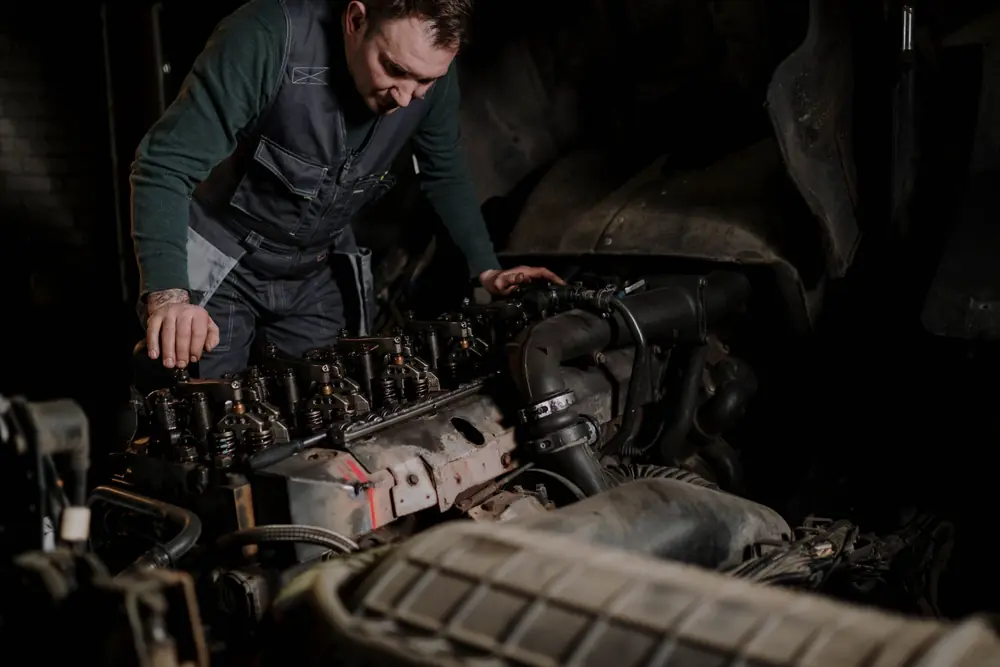
- Injectors and fuel pumps, often checked when there's smoke or a hard start.
- Fuel filters and water separators, and clearing air out of the system.
- Turbochargers, boost leaks and intake problems.
- Cooling system: radiator, hoses, water pump, fan and thermostat.
- Oil leaks and engine sensors.
- Transmission problems that come with a diesel truck, like slipping or harsh shifts.
Emissions parts: repaired, not removed
Today's diesels use a diesel particulate filter (DPF) that traps soot and burns it off from time to time (a "regen"), an exhaust gas recirculation (EGR) system, and a selective catalytic reduction system that uses diesel exhaust fluid (DEF). When one of these fails, a diesel shop can diagnose it and repair or replace the part so it works as designed.
Removing or disabling emissions controls isn't a repair. The EPA says tampering with a vehicle's emissions control system is illegal under the Clean Air Act, and Texas has its own anti-tampering rules, according to the Texas Commission on Environmental Quality (TCEQ). Shops reached through this site do repair work only.
When DEF runs out or a sensor fails
The EPA explains that when the system's sensors detect that DEF is gone, the engine cuts power in steps, and under current software speed can drop to 5 mph within about four hours. A failed sensor can set this off even with a full tank. In August 2025 the EPA asked manufacturers to update software on existing vehicles to soften these derates. If you keep getting DEF warnings, have the fluid, the sensors and the software checked.
What a diesel shop checks
- When and how it happens: cold or hot, loaded or empty, at idle or on the highway.
- A computer scan for codes and live data.
- Fuel system tests, such as pressure and injector checks.
- Air, turbo and exhaust checks, including the emissions parts.
- A written estimate, then the repair and a test drive.
Urgent or can it wait?
Stop and call if a red warning light comes on, the temperature climbs, oil pressure drops, you smell fuel, or the engine knocks. Running it can turn a repair into an engine replacement.
Book soon for a slow start, a yellow light, smoke only at start-up or a drop in mileage.
What engine repairs cost
Prices depend on the engine, the part and the hours, and whether it's done at the shop or on the road. Our cost guide shows what's known with sources. The shop will confirm the price before any work.
Before you authorize the work
- Get the estimate in writing, with parts and labor listed.
- Ask if injectors, pumps or turbos are new or remanufactured.
- Ask what warranty comes with them, in writing.
- Ask what else they found, so you can plan the next repair.
Engine repair across the Valley
- McAllen, Pharr and Mission
- Edinburg, San Juan and Weslaco
- Brownsville, Harlingen and San Benito
Need it fixed where the truck is? See mobile and roadside diesel repair. For pickups and semis in particular, see diesel pickup repair and semi truck repair.
Diesel engine FAQ
Is it safe to drive with a check engine light?
A steady yellow light usually means get it checked soon. A flashing or red light, low oil pressure or rising temperature means stop as soon as it's safe and call.
Why does my diesel keep regenerating?
If it seems to regenerate more often than it used to, have it scanned. The shop can read the data and look at the DPF and its sensors to find out why.
Can bad fuel damage a diesel?
Dirty fuel can clog the fuel filter. If problems started right after a fill-up, tell the shop where and when you fueled.
Do you do engine rebuilds?
Some shops do, and some send that work out. Ask when you call.
Engine acting up?
Tell the shop what you see, hear or smell, and when it happens.